

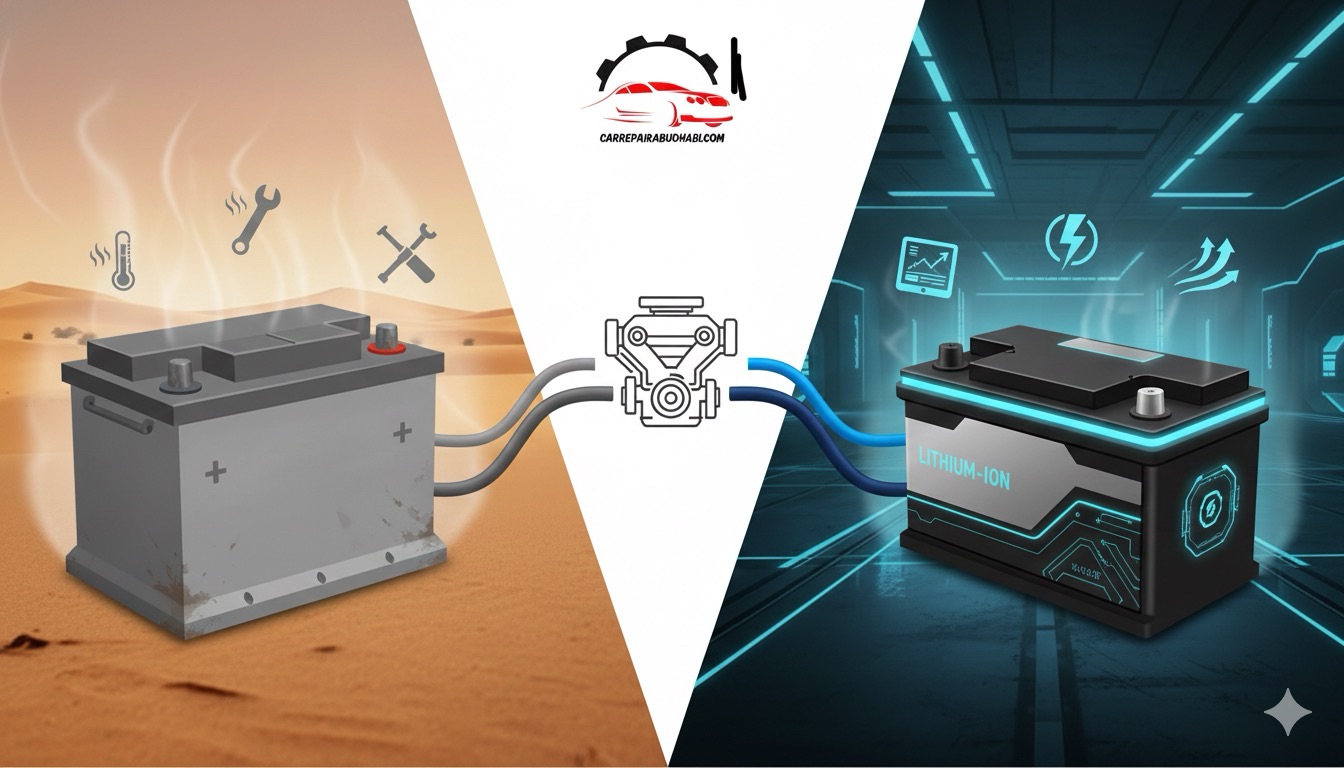
For car battery fixes or swaps in Abu Dhabi, drivers usually wonder:
“Should I stick with traditional lead-acid or upgrade to a lithium battery?”
When it’s super hot, roads are packed, or gadgets need power, picking the right battery really affects how well things run, last over time, yet save money down the road – so here’s a full breakdown that shows differences clearly while guiding smarter picks.
What Are Lead-Acid Batteries?
Lead-acid batteries power nearly every gas or diesel vehicle on the road. These units rely on lead plates combined with sulfuric acid to work. Installation is straightforward, they cost little, besides being sold just about everywhere.
Pros of Lead-Acid Batteries:
- Lower initial cost
- Easily available in most workshops in Abu Dhabi
- Fits plenty of everyday vehicles
- Basic upkeep or fixing stuff
Cons of Lead-Acid Batteries:
- Fewer years overall – usually just 2 or 3
- Very heavy
- Sensitive when it gets way too hot
- Needs frequent fluid inspections along with recharging upkeep
What Are Lithium Batteries?
Lithium-ion batteries pop up more in hybrids, EVs, or high-tech cars. Lighter build means they last longer while running on clever power controls.
Pros of Lithium Batteries:
- Lasts a good while – maybe 8 to 10 years – with solid care
- Lightweight
- Charges faster
- Works well in city driving or quick trips instead of long commutes
- Deals well with extreme heat
Cons of Lithium Batteries:
- Higher upfront cost
- Suits newer models better – older ones might struggle
- Fixing it needs someone who knows the details
- Few spots left at some classes
Which Battery Handles Abu Dhabi Heat Better?
Abu Dhabi gets super hot, particularly during summer months. That kind of heat hits lead-acid batteries hard
- Acid evaporation
- Sulfation
- Internal corrosion
Lithium batteries:
- Handle heat better
- Get steadier results
- Stay cool when it’s blazing outside
If your car faces steady heat, go with lithium – it holds up better.
Cost & Maintenance Factors to Consider
Lead-Acid Battery Is Better If You Want:
- Lower upfront cost
- Easy availability
- Fine for everyday tasks – no fancy gear needed
- Fixes you can get done pretty much anywhere
Lithium Battery Is Better If You’re Looking For:
- Long-term savings
- Improved performance
- Lower battery weight
- Better able to handle tough weather
- Fewer swaps needed through time
Which Battery Fits Your Vehicle Type?
Go for a Lead-Acid Battery if:
- You’re behind the wheel of a regular gas or diesel vehicle
- You’re after something cheap that’ll last a while – but not forever
- Your car runs lighter on electric extras
- You swap out the batteries now and then – no big deal
Go for a Lithium Battery if:
- You’re behind the wheel of a high-end car – maybe it’s got hybrid power, or perhaps it runs on electricity instead
- You want long-lasting performance
- You often move through busy roads
- Your vehicle runs on big electronics – like parking aids, music systems, climate control, among others
Final Decision
If you’re driving a regular car, a solid lead-acid battery that’s kept in good shape will do the job just fine – yet when it comes to lasting power, handling hot conditions without trouble, or getting strong performance out of your system, going with lithium makes more sense.
To get a solid tip that fits how you drive, your vehicle type, plus the heat out here, it’s smart to ask someone who knows batteries in Abu Dhabi. While local conditions matter, personal habits count just as much – so talking helps. Since models differ, one-size solutions rarely work well around here. Rather than guessing, go with advice from hands-on pros familiar with city drives and strong sun.