

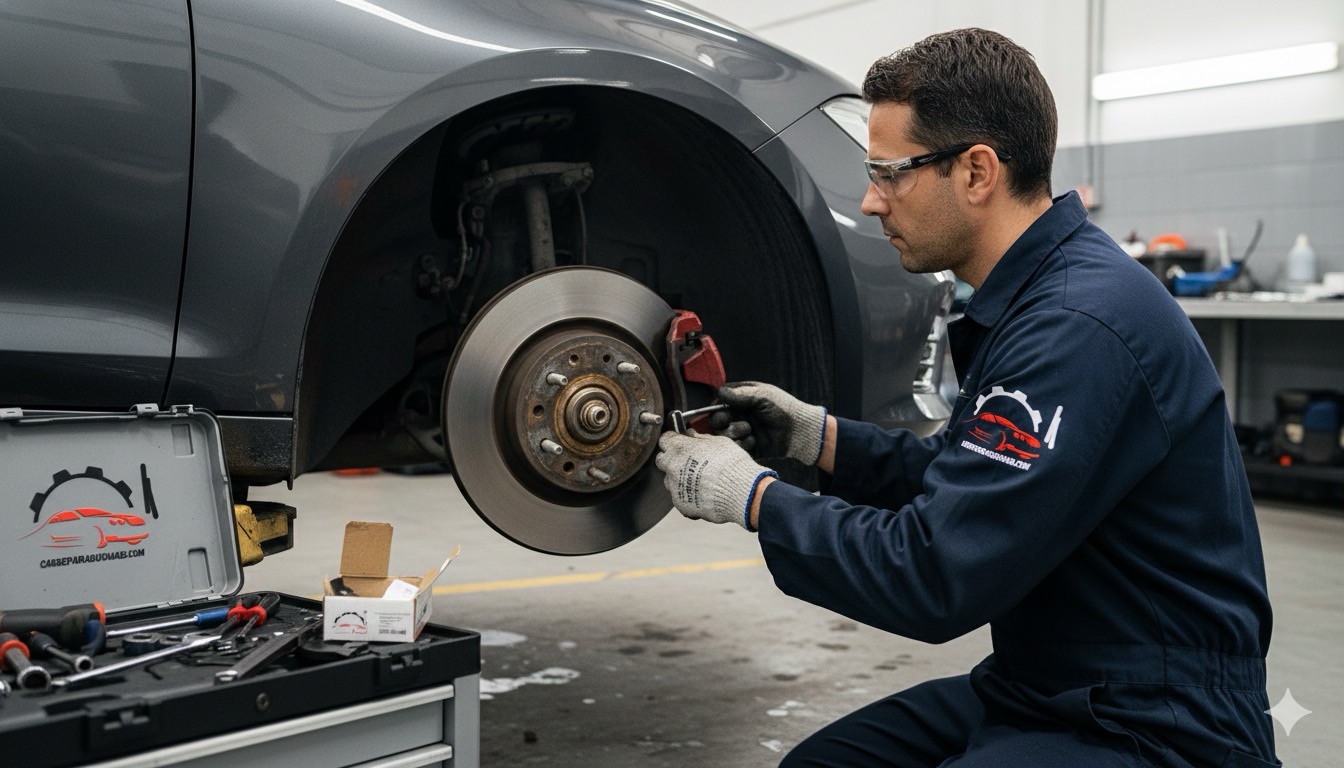
In a place like Abu Dhabi, where fast roads come with unexpected jams, your car’s brakes might be the top thing keeping you safe.
Ignoring them isn’t only dangerous – sometimes it leads to big repair bills. If you’re looking for solid help with auto fixes around town, knowing when to swap out brake pads or discs makes a real difference.
This is your go-to plan for making sure your car can halt smoothly on the E11 and other roads.
Understanding the Essentials: Pads, Rotors, and Calipers
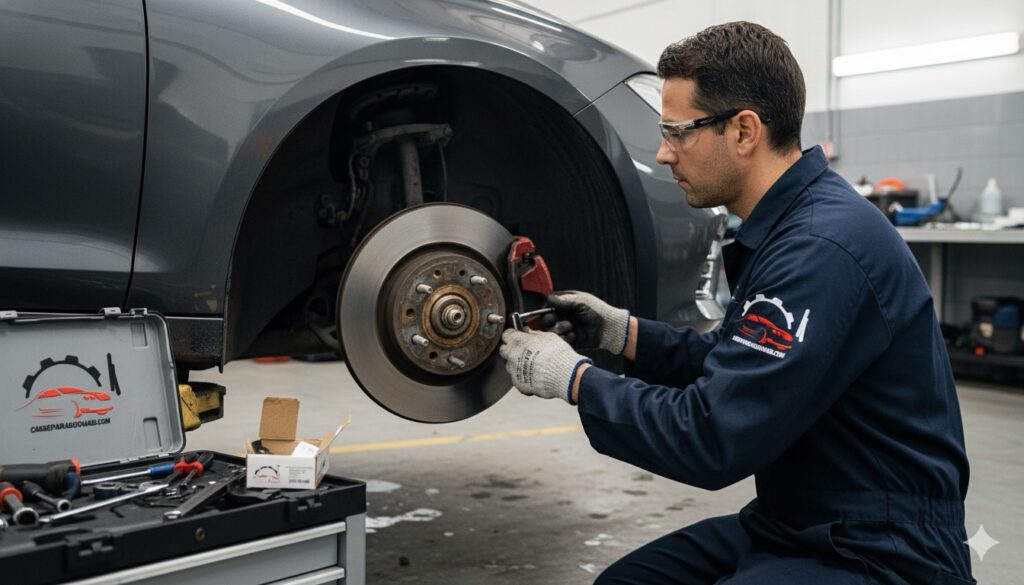
Knowing the key parts of your brakes makes upkeep easier. The system runs on three basic pieces that work together – understanding them matters. One part grabs, another pushes, while the third links everything smoothly.
Each plays a role when you slow down
Brake pads use stuff like metal, ceramics, or natural blends – they press on the spinning disc. When you hit the brakes, this part grips hard. It’s built to get thinner slowly, so it needs swapping out more than anything else.
Brake rotors – those smooth metal rings tied to your wheels – get squeezed by brake pads when you hit the brakes, which slows how fast they spin. As this happens, a lot of heat builds up from rubbing. That’s why these parts need to take serious warmth without warping or failing.
Brake Calipers: These hold the brake pads and pistons inside. Once you hit the pedal, pressure pushes the pads onto the spinning disc. Instead of just sitting there, they clamp down hard to slow things off.
When to Replace Brake Pads: The Warning Signs
Brake pads get thinner over time – so spotting this soon helps dodge expensive rotor trouble. If you’re after solid brake pad service in Abu Dhabi, keep an eye on these obvious warning signs instead.
- A loud squeaky noise – this comes first. It’s a sign things might go wrong soon
Most newer brake pads come with tiny metal bits – known as wear markers. Once the braking surface becomes nearly gone, around 2 mm to 4 mm left, those bits start dragging on the disc. That drag creates a sharp, noisy screech. The noise means you should check the brakes without waiting much longer.
- A squishy or mushy brake feel
If your brake pedal sinks more than normal, or goes almost to the floor when pressed, there could be trouble past just worn pads – maybe brake fluid’s low from a leak or bubbles trapped in the system. Get it looked at right away by someone trustworthy in Abu Dhabi.
- Visual Inspection
If your wheels let you see, take a quick peek at how thick the pads are. When the rubbing part’s as thin as a pencil’s eraser – around 3 mm – or even thinner, swap them out.
Brake Rotors: Wear, Tear, and Replacement
Rotor durability beats pads, yet they won’t survive forever. Spotting worn rotor clues matters – keeps your entire braking setup in check.
A. Cutting grooves or making scores
Deep gouges or lines you can see on the rotor mean the brake pads were used up, so the metal part behind them rubbed against it instead. Because of this, chances are high you’ll need new rotors.
B. Shaking or movement (bending)
If your steering wobbles or the brake pedal jitters when slowing down, chances are the rotors have warped. That bumpy spot – called “runout” – usually comes from intense heat buildup; fixing it means grinding them smooth or, most times, swapping them out entirely, particularly on powerful or bulky cars you see around the UAE.
What That Grinding Sound Really Means
The awful screeching from brakes? That’s a serious red flag – means trouble right away.
That loud grinding? It’s because the pad’s grip layer wore off totally. Now, the pad’s steel base rubs straight on the rotor’s metal surface.
The damage? When metal hits metal, it chews up the rotor fast – usually carving deep lines, which means swapping out both pads along with the rotors.
Stop driving right away if you notice a grinding sound – get in touch with a trusted car mechanic across UAE instead. Pushing on could ramp up repair fees while putting your wellbeing at risk, so act fast through proper auto care support nearby.
When you need solid car fixes in Abu Dhabi, skip the stress by keeping up with regular checkups. No point waiting till things squeal – tag a brake lookover onto each oil change so your drive stays smooth and safe.